DECK DRAWINGS
ARE YOU LOOKING FOR BUILDING PERMIT DRAWINGS?
Engineered Plans offer complete building permit package. We offer one stop shop for your Building Permit and Consulting Needs
When Is An Architect Required For a Deck Building Permit?
We specialize in preparing permit package and applying for building permits with the different cities in Ontario. Our proficiency covers various aspects including construction additions, demolitions, renovations, and expansions, guaranteeing a smooth process for you. Our carefully crafted plans not only complement the specific features of your property but also streamline the approval process with local authorities.
We specialize in preparing permits for the following types of projects:
- Secondary Dwelling Permit
- Interior Renovation Permit
- Deck Building Permit
- New addition to an existing home
- Garage Conversion Permit
- Exterior Home Renovation Permit
We offer the building permit services for the following:
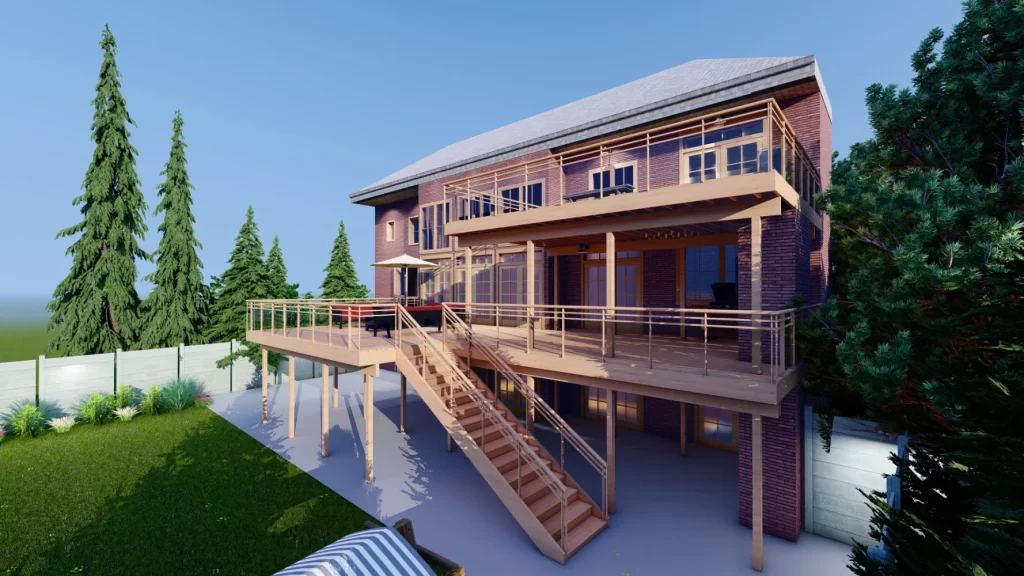
Elevated Decks Above Basement Walkout
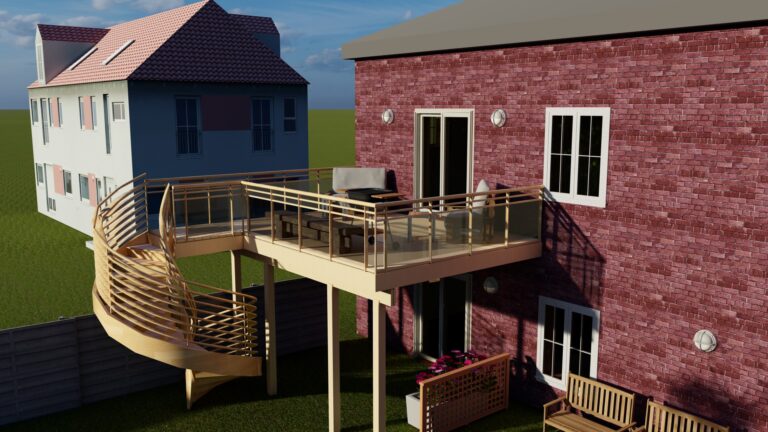
- Lot lines including dimensions.
- Location of proposed sundeck dimensioned to other buildings and lot lines.
- Municipal address
Canopy covering for Decks
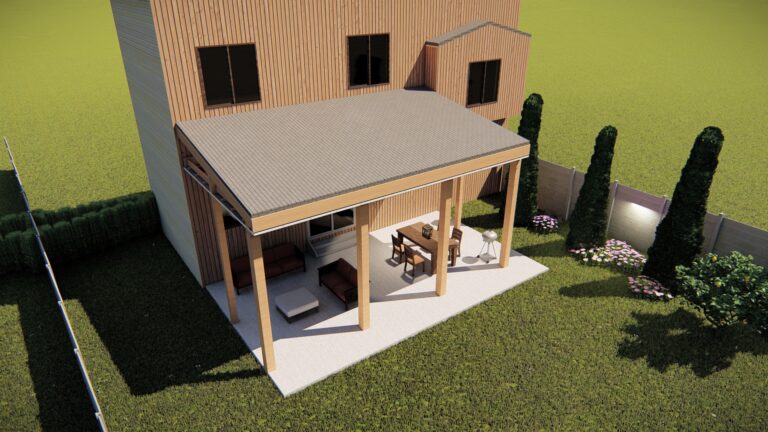
- Footing size and location.
- Structure including beams, floor joist including size, span, and direction.
- Full dimensions. Elevations Drawing to include: The general appearance of the deck.
Pergolas
- Lot lines including dimensions.
- Location of proposed sundeck dimensioned to other buildings and lot lines.
- Municipal address
Carports

- Footing size and location.
- Structure including beams, floor joist including size, span, and direction.
- Full dimensions. Elevations Drawing to include: The general appearance of the deck.
Portfolio
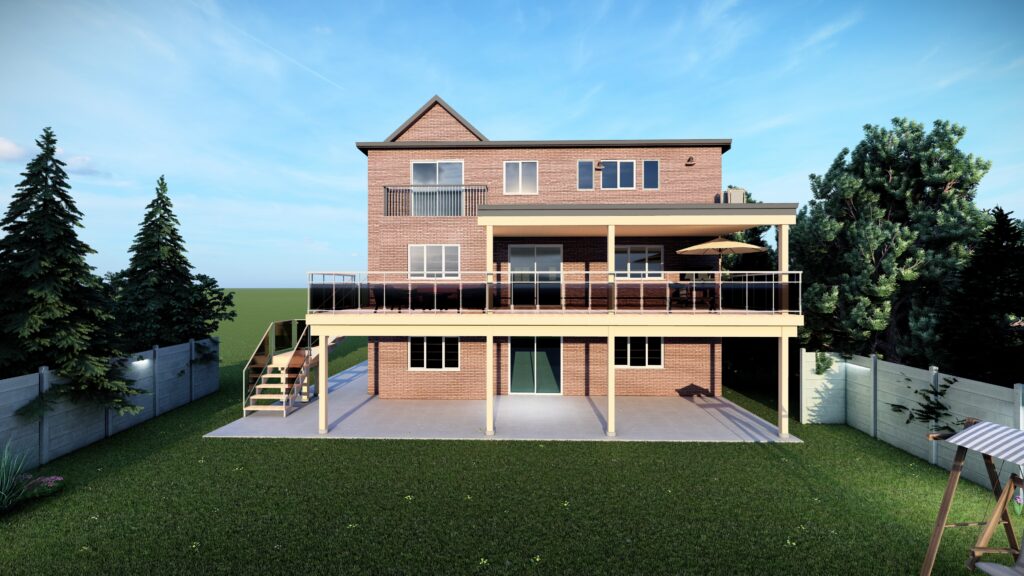
Brampton Deck Project
The Project involved designing a new deck along with a canopy for our client in Brampton, ON. The scope of work
was to build a new deck in the backyard that would increase the outdoor space for the home owner. The deck was approximately 9′ above ground.
Engineered Plans was retained for the Design of the new deck and canopy and applying for building permit and Credit Valley Conservation Approval.
Vaughan Deck Project
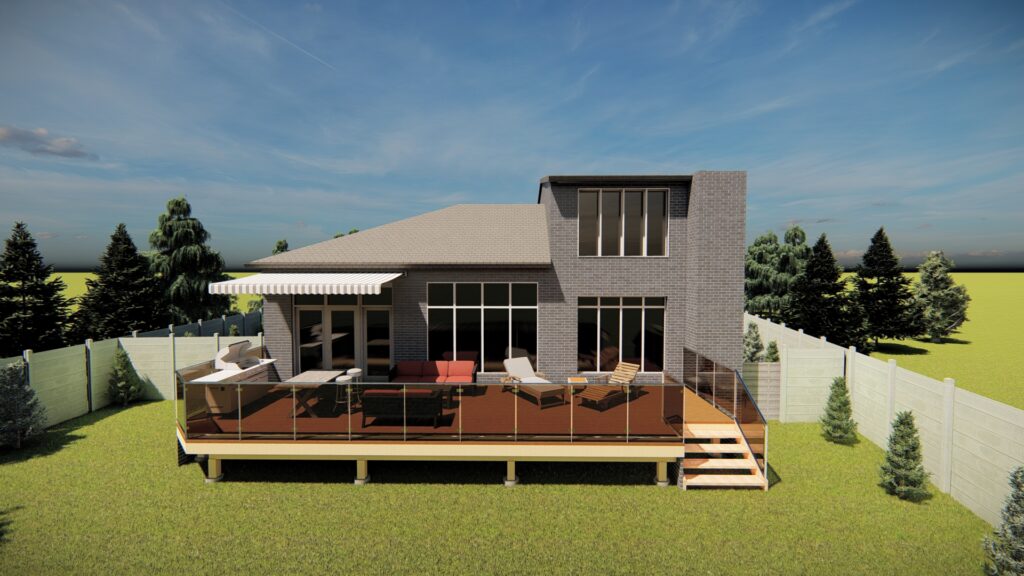
Under the Building Code Act, a building permit is required for the construction of a new deck over 10 square metres (approximately 108 square feet)<br>
Frequently Asked Questions
Please reach us at if you cannot find an answer to your question.
DO YOU NEED A PERMIT TO CONSTRUCT A SECONDARY DWELLING IN YOUR HOME?
WHAT IS SHOWN ON BASEMENT RENOVATION PERMIT DRAWINGS?
Permit drawings for basement renovations have complete architectural and structural plans the current basement layout and the proposed changes to the basement.
These drawings are vital when seeking a building permit. These drawings show clear information needed by the city and include a site plan, floor plans, elevations, and requisite details. Local authorities utilize these permit drawings to evaluate proposed changes, ensuring adherence to building codes, safety regulations, and zoning ordinances. The precision and comprehensiveness of these drawings play a pivotal role in securing legal approval to proceed with your basement renovation project.
HOW LONG DOES A THE SECONDARY DWELLING PERMIT PROCESS TAKE?
Building permits are typically needed for construction, demolition, renovation, and additions to residential, commercial, and industrial properties. Projects involving changes to a building’s structure, plumbing, or mechanical systems often require permits.
The timeline for obtaining a building permit depends on the complexity of your project and the workload of the city’s building department. Simple projects may be approved in a few weeks, while more complex projects can take several months
IS IT POSSIBLE TO CHANGE YOUR DESIGN ONCE THE PERMIT IS APPROVED?
Modifying permit drawings during construction can be possible, but it often depends on the nature and extent of the changes.
We recommend reaching out us to resolve changes in your current construction project. We will talk with the city and inspector to accurately show changes that were made one site after getting the permit approved. It’s essential to communicate any alterations promptly to us. We can assess the modifications and determine if they comply with regulations, and guide you on the necessary steps for approval.
WHAT HAPPENS IF MY PERMIT DRAWINGS ARE REJECTED BY THE CITY OF TORONTO? HOW CAN I ADDRESS THE ISSUES AND RESUBMIT FOR BUILDING PERMIT APPROVAL?
We have worked with 100’s of clients whose permit was previously rejected or had too many ongoing changes requested by the city. We will your review your application for Ontario Building Code, National Building Code and City By-laws to make sure it is not rejected again.
WHAT SPECIFIC INFORMATION IS NEEDED FOR BASEMENT RENOVATION PERMIT DRAWINGS?
HOW LONG IS A BASEMENT RENOVATION PERMIT VALID ONCE IT IS APPROVED?
BUT WHAT ABOUT THE FASTRACK SERVICE FROM THE CITY OF TORONTO THAT LETS YOU GET A PERMIT WITHIN 5 DAYS?
The FASTRACK building Building permit service aims to issue permits for specific home renovation projects within a 5-business-day timeframe. However, it’s important to note that FASTRACK applications are designed for minor interior renovations and projects without any external work. For more extensive projects like additions, garages, or new builds, the processing time is typically longer, depending on the project’s individual scope.
It’s often overlooked that the city of Toronto involves different departments in reviewing various aspects of an application. Different departments handle HVAC, life safety, and structural drawings. If your project involves external work, such as building an addition or a shed, the city of Toronto will also review it to ensure compliance with zoning by-laws. Obtaining a Building permit entails more than just submitting a few documents, which is why the process generally extends beyond the 5-day period.